
Mission Zero has recently formalised its stake in Union DAC Ltd, a new UK entity for scaling and delivering carbon removal via DAC, in partnership with a leading low-carbon project developer, and another major British DAC company.
This consortium is set to develop UnionDAC – one of the world's most significant facilities for atmospheric carbon dioxide removal (CDR) with an eventual 60,000 tonnes per annum operating capacity; this will be alongside supporting local employment opportunities, growing UK supply chains, and scaling the UK’s CDR ecosystem.
The UnionDAC initiative positions the UK at the forefront of a nascent industry vital for climate stabilisation and the transition to a sustainable economy. With the IEA anticipating a requirement for nearly a billion tonnes of annual DAC removals by mid-century—a market exceeding $100 billion—rapid expansion is essential for meeting market demand and delivering climate impact, as current global capacity remains below 100,000 tonnes annually.
Partners
The partners in UnionDAC integrate deep technical proficiency with established operational track records. They include:
- Progressive Energy: an expert in developing and implementing projects that bring new, often technically challenging technologies to market. The company originated the development of the HyNet in the northwest of England. Now in construction, HyNet is a hub for carbon capture and storage, power generation, and low-carbon hydrogen projects.
- Airhive: a London-based DAC developer that has pioneered a low-cost DAC technology using fluidised beds and a mineral sorbent. The company operates a plant in Teesside, England at Teesside University’s Net Zero Industrial Innovation Centre and has demonstrated its system at commercial scale in Alberta, Canada.
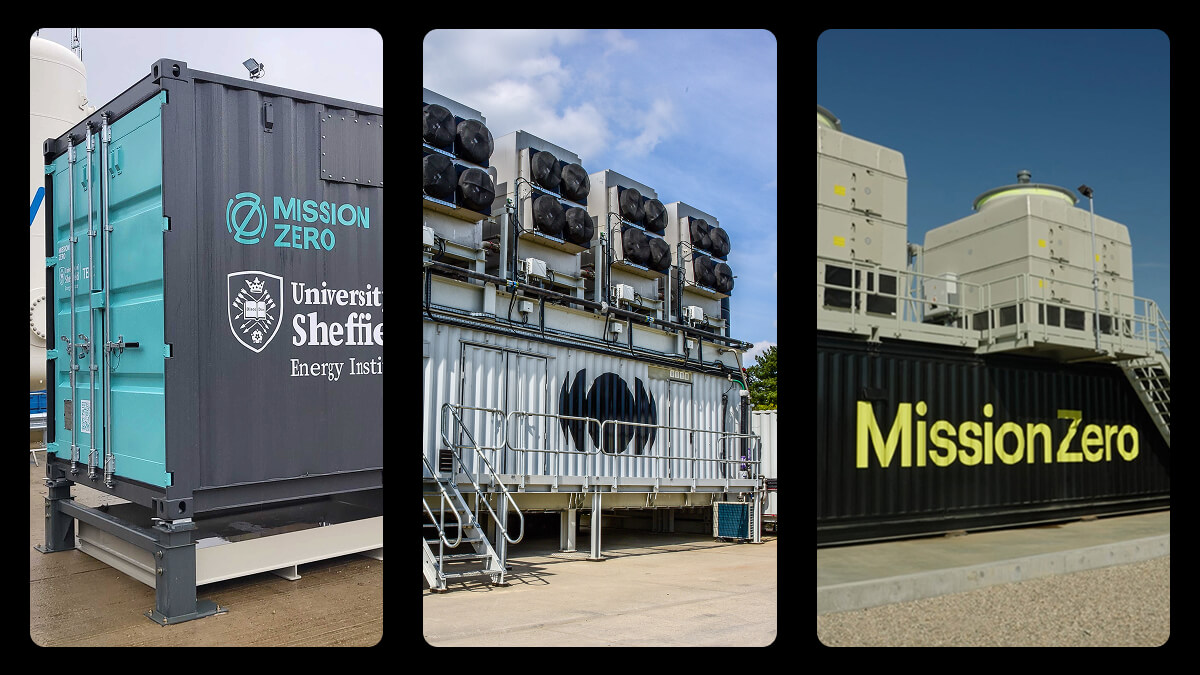
- Mission Zero Technologies: a London-based electrochemical DAC technology developer with operating experience and low costs tied to its optimised energy requirements and mature supply chains. The company operates the first commercial DAC plants in the UK in Sheffield and Norfolk, as well as a plant in Alberta, Canada.
Initial deployment of UnionDAC is targeted for 2030 with a 20,000-tonne annual capacity. A subsequent phase by 2032 aims to add a further 40,000 tonnes to the facility's output. Situated at Wilton International on Teesside, this 60,000-tonne facility will bolster one of the world's premier industrial decarbonisation clusters, introducing a critical new pillar to the region's green industry.


The project intends to leverage the sequestration infrastructure of the Northern Endurance Partnership. This involves utilising extensive subsea pipelines to transport captured gas for permanent storage deep within the North Sea bed.
UnionDAC supports the UK's net zero ambitions and underscores its role as a global climate leader. By providing significant domestic CDR capacity by 2032, UnionDAC helps meet critical carbon budgets. The latest forecasts from the Climate Change Committee indicate a need for 8 million tonnes of DAC-based removal annually by 2050, a stark contrast to current levels.
Regulatory frameworks in the UK and globally are shifting to drive demand for DAC, potentially integrating these removals into compliance-based trading systems to meet national climate targets by the end of the decade.
“Direct air capture technology has reached a point of take-off to deliver impact at scale across the UK and the world. But this requires smart project design. Joining forces with other sector leaders makes sense when government, technology providers, and investors have interlocking roles in scaling DAC before 2030.”
Rory Brown, CEO of Airhive
As the pioneer of this sector in the UK, UnionDAC will catalyse the domestic supply chain for engineering and materials, starting in Teesside and expanding across the nation and the global market through future projects.